
A continuation of the Hidden Figures episodes
Also available as a video podcast on Spotify.
Crystal (she/her)
Today I’m going to be joined by Eric Ballentine, who has been a volunteer and in leadership for both Climbers of Color and Queer Mountaineers. I previously spoke to Eric not that long ago about a topic of the Queer Mountaineers and Climbers of Color plagiarism issue.
And now they volunteered to come back to talk a little bit more about situations within queer mountaineers. You can also read their letter of resignation at the end of this article. So buckle up, let’s hit the road and hear what they have to say.

Crystal (she/her)
So how much do you estimate your time was donated per week to these activities as volunteer coordinator?
Eric (they/them)
I’d probably say on the busy end, a couple hours a week, right? The other thing was like on boarding volunteers as well, right? So I would do a lot of volunteer interviews as the applications came in and then just getting them onboard and making sure they have all the documents and stuff squared away that you want. But yeah, like it wasn’t.
It was honestly, it was as taxing as you made it to be really because you weren’t getting a lot of like direction or maybe no direction at all most of the time. So it was just me like really taking the role and making it mine.
Crystal
Yeah, that takes a lot of time, effort and energy. As someone who has on boarded a lot of volunteers as well, it does take a lot of effort. It’s kind of cool to be an architect of these things, right? But it’s also nice to have a little bit of direction as well. And this is an unpaid position, correct? Okay, gotcha. So how did you end up becoming volunteer coordinator exactly?
Eric
Yeah.
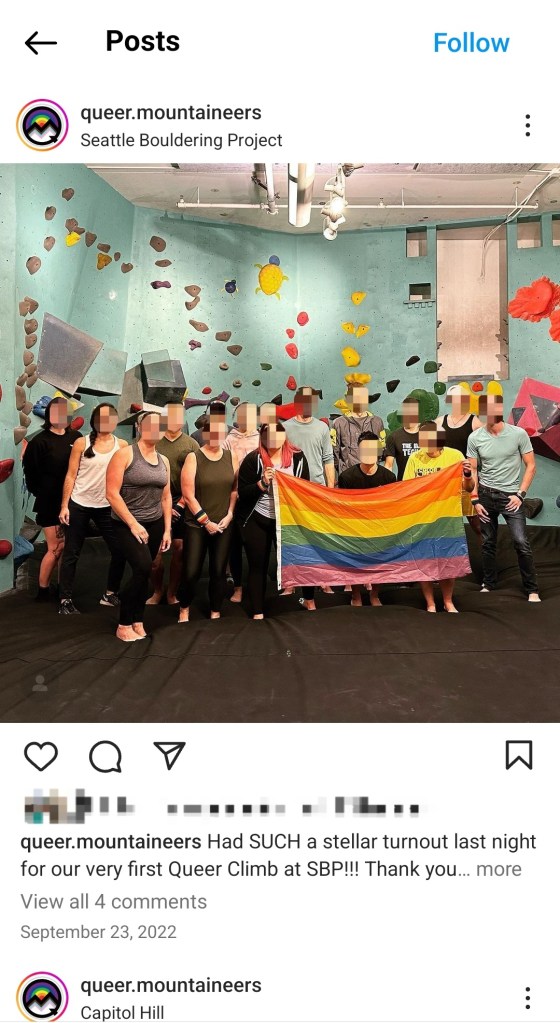
Great question. After like a couple of months of just kind of volunteering in general, I came on and I was started, actually it’s a year anniversary next week of doing our QT BIPOC Climb Night. So I did that first. And then within like a month or so, they asked me if I wanted to be the volunteer coordinator. I said, yeah.
Crystal
Nice. Yeah, and so you seem to me like a very motivated person and you’re used to creating spaces and maintaining spaces as well and you have great communication skills from what I’ve seen. So it seems like a position like that would suit you very well and you enjoyed the work as well. Nice. When did it start to be, I don’t want to call it a burden, but when did it start to be almost, at a place that you weren’t enjoying yourself anymore?
Eric
Well, there, yeah, there, there had begun to be a lot of lack of leadership, right? in terms of direction and like regards to what I was supposed to be doing, right? So like, we were supposed to be having these monthly meetings for volunteers, right? and like this meeting would come up and I would be like, Hey, do you have anything for this meeting?
Because usually leadership is not there, right? So do you have anything for this meeting? Sometimes I get no response. Sometimes they’d be like, no, we don’t have anything. And it’s kind of like, well, why am I holding this meeting? So that’s how I created the process of, at this meeting, I’m going to make sure that I check in with every volunteer and make sure that they’re supported, because retention is important, right? And if people don’t feel supported, they’re going to go away.
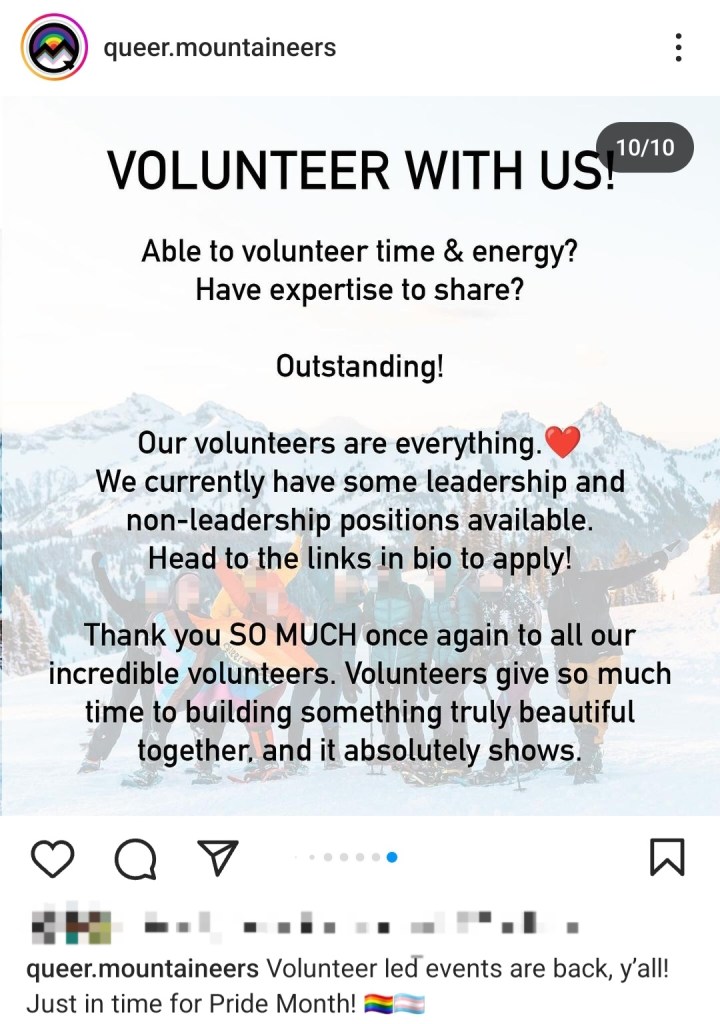
And so it just seemed that leadership was divesting more and more from its volunteers. And here’s where it gets interesting is that despite the fact that they would continually divest from them, they would constantly tell me and other people and roles outside of climb night hosts that, well, our volunteer engagement is low. We need people to do more. We need people to do more events. And it’s just like, yo, that’s great, but how about you give me some more information? How about you give me some direction? And instead of just saying that these things need to be done.
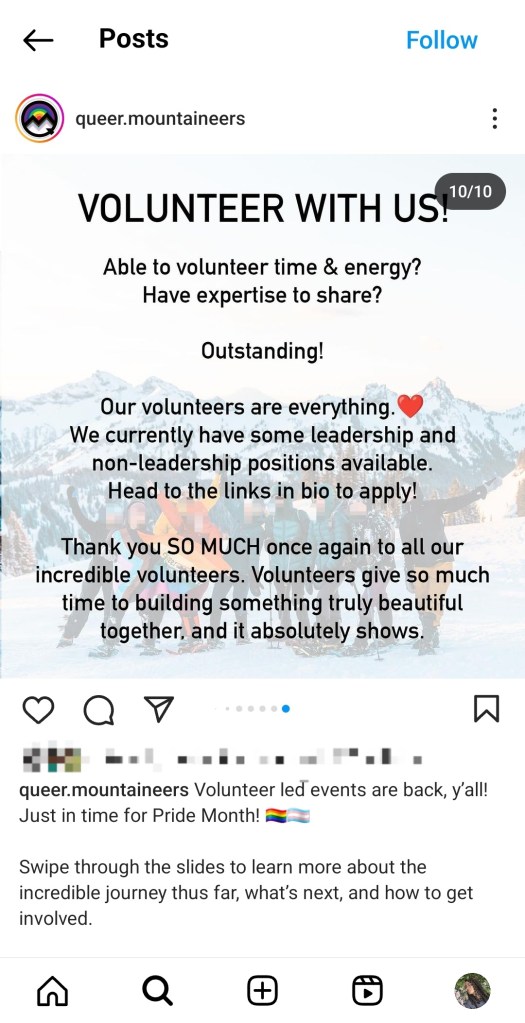
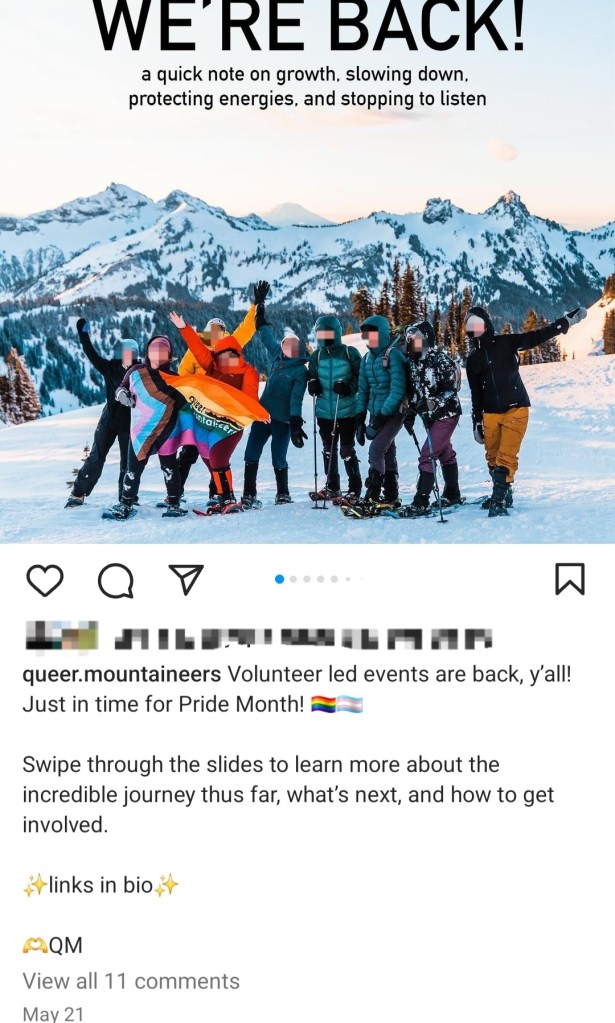
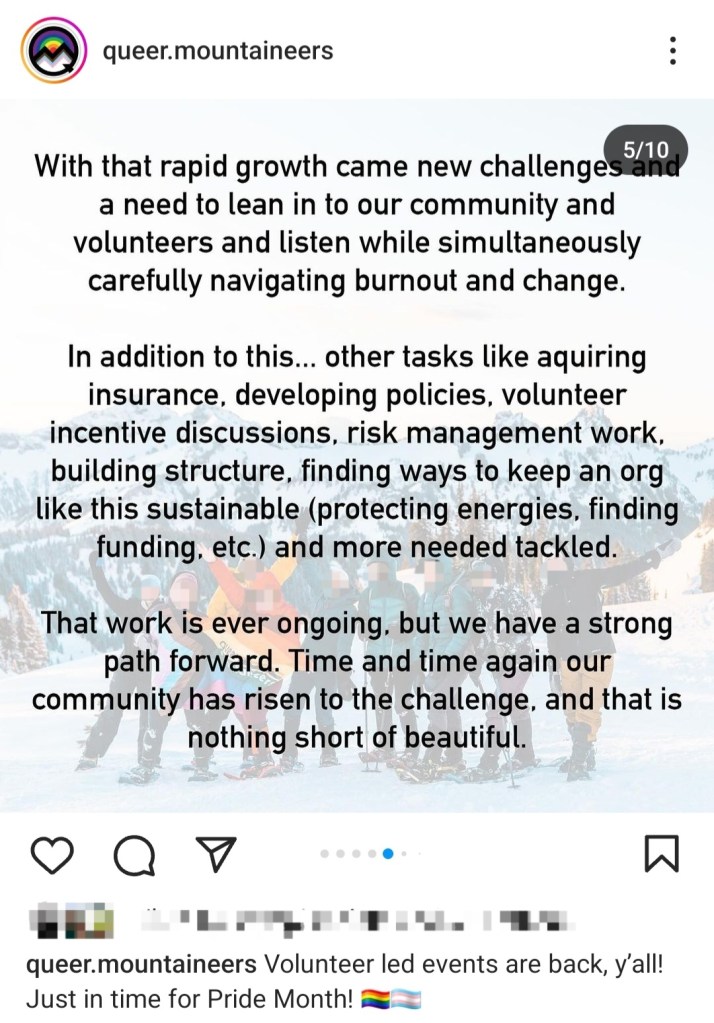
And so like it started like that’s kind of where it started, right? And a lot of people were voicing their frustrations. And I think the big thing where it got, this is what made me resign was that we had a meeting. They call it a leadership meeting, but I just want to clarify. Coordinators are they, yes, they are leaders, but they don’t have any decision -making power, right? So when I say, when I refer to leaders, I’m talking to those who have the decision -making process, which is our executive team, right? And so we had a leadership meeting. In that leadership meeting, they gave us some updates. And one of the things was that we did not have insurance, right? And not only did we not have insurance, they were still focused on the fact that volunteers weren’t engaged. And instead of having a conversation about the best ways to utilize insurance, the best, because we all know, right, folks for folks outside of climbing, insurance is very, very expensive, right? And so instead of talking about reducing the amount of events, they were instead talking about how can we do events, without insurance? What is our work around? And I’m talking about, we’re talking about conversations of maybe not posting it as an official queer mountaineers event. And like, and like, keep in mind that they are asking volunteers to do this. And where it, where it was really difficult for me and really upsetting was that you were not sharing this information with volunteers. So you were asking me as a volunteer coordinator,
There are other roles and there were other people in this meeting, but I took it personal because I’m the volunteer coordinator. I’m the one that checks in with volunteers. And so you’re asking me to encourage these people to do these things that you don’t have insurance for. And not only in that meeting, we talked about like, yes, they’re shopping around for insurance and it’s very expensive. They still chose. They didn’t get insurance that day. They instead, they wanted to focus on doing a risk assessment, right?
Not to say that that’s not important, but the immediate need should be insurance. And I think everybody in that meeting, with the exception of leadership, was on the same page, right? There was a lot of conversation from a variety of different people that were talking about resigning.
And I kept to it. I was like, this is crazy. I’m resigning. And even in that meeting, I am intelligently expressing my concerns. And I’m telling them, first of all, this conversation isn’t even right. We shouldn’t even be having, because by this time, we’re having a conversation about how to work around it.
We’re having a conversation of basically like, hey, how can we do these events still have this traction, right? Without insurance. And it’s just like, damn, y ‘all like, y ‘all get it. It was like, it was, it was, it was shady at that point, right?
So ultimately I just said, you know what, I’m not going to do that. I’m not going to put people at risk. I also in that meeting, I said, hey, maybe you should just take a pause and reset and like figure things out, right? And not rush into things.
Because you know summer, spring and summer are on the move right and so they have all these things planned out. They want to do all these rock climbing events. They want to do all these campouts and go to Vantage and do all these cool things which are very cool but it’s a huge risk to have those things and not have insurance. So I ended up resigning a couple of weeks later.
I will say this, I was going away very quietly from that role. I sent an email nine o ‘clock in the morning on a Friday. I did not get a response to that email, but I did get a response that I was removed from a leadership Slack channel, right? So it was clear you got my email, but you didn’t respond to that. And a few hours later, I also posted, and the volunteer channel to let people know, hey, I am stepping away from this role. Thank you for all that you’ve done. And I told him, I was like, look, this organization is nothing without volunteers. Like, it is y ‘all who run this organization. And I was saying that from a place of like a place of being real. Like I was like, yes, I was hurt. But I was like, it was really important for them to know like y ‘all run this shit, not them. Right.
And it was cool, and I was chill with it. And then I got that message, that very bland message of appreciation. You know the message I’m talking about. It’s very bland. It’s very not genuine at all. And that only came because I posted, and before that, somebody else posted that they resigned. So like…there’s a little bit of smoke coming, right? So it felt very much of “we need to cover our tracks”. Because again, they didn’t respond to my email and give me that grace, right? So it really bothered me. And so I told them, I don’t remember the exact words that I told them, but I was just like, hey, I was like, “I don’t feel appreciated. This feels very ungenuine”.
And I was like, I gave them basically three bullet points. I said, one, people have been asking for transparency and accountability for months. It’s still not there. They still don’t know what’s happening. Right. I was like, two, I was like, stop telling volunteers they need to do more. I was like, because they’re doing plenty. I was like, if you want them to do more than you need to give us some suggestions. And then three, the other thing I was, which we didn’t talk about,
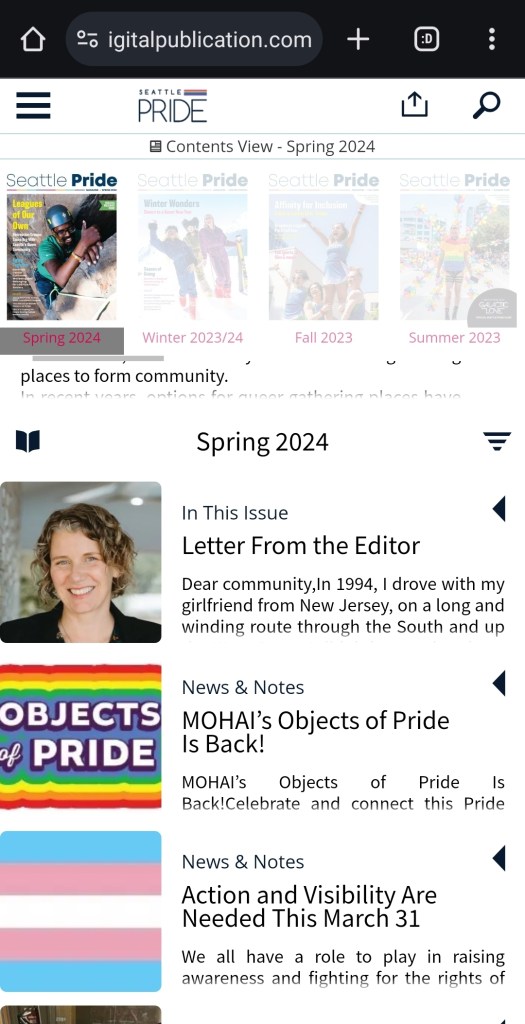
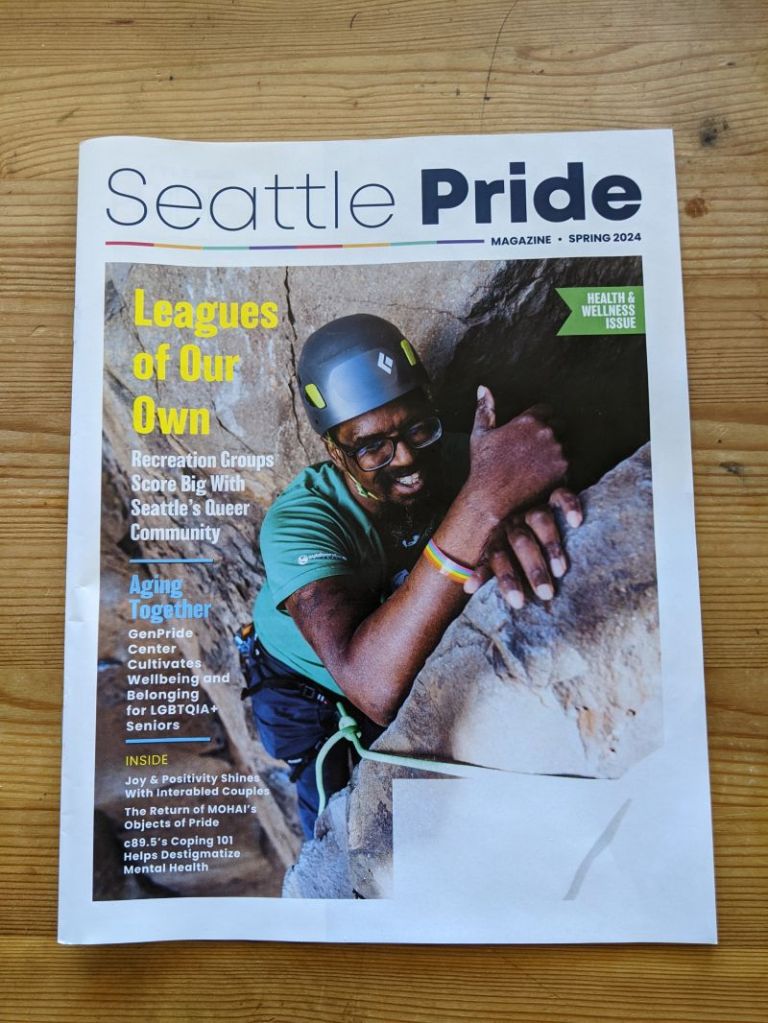
My photo was used on the cover of Seattle Gay News [Seattle Pride] and they did not tell me about it. Now, yes, we’re all volunteers and we signed a photo release. So I ain’t mad about that. But give me a heads up of, hey, we’re gonna put this picture in here, because you would think as someone who volunteers for your organization, you would think you would give them a little bit of courtesy, especially because it was a picture I had never even seen before. Right? That’s what’s crazy. That’s what really upset me was like, I had asked because that photo was from a year ago from the first camp out that we did out in Vantage. And I had asked multiple times, I was like, hey, did you ever have any pictures from that? And they were like, no, we didn’t have any pictures or like I didn’t work on or whatever. And then all of a sudden this amazing photo of me rock climbing is on the cover of Seattle Gay News [Seattle Pride], right? And I found out about that because, you know, queer mountaineers tagged me in their story. And that’s how I was notified that I was in that thing, right? And so I was excited, right? I was excited at first. And then it was literally like a partner of mine. They were like, did you give them permission? And I go, wait, no. No, I didn’t. They’re like, you didn’t know about it? And I was like, no. They were like, do you think people know when their picture is going to be in the paper, right? So I mentioned that, right?
And I told them I was like straight up, you need to do better. So not only did they delete my message, but they deleted me from Slack, like completely. Behind the scenes, people had saw that. I mean, the thing about it was like, they deleted me instantaneously, like maybe, maybe two minutes max right like they deleted this thing and the irony is that you are telling me that they sent me an email after that whole thing. And I don’t consider it an apology when you have a whole list of excuses as to why you did what you did. Right. And so in that email, they’re like, we’re so sorry, blah, blah, blah. We gave them those pictures a while ago.
And we didn’t know, and they basically invited me to a meeting with Seattle Gay News [Seattle Pride] to get an apology. And it was like, no, I don’t want to meet with y ‘all. Like, I don’t even feel safe around y ‘all anymore, right? And then it was also the thing of like a lot of a literal phrase used in that email was, “can you give us the benefit of the doubt?”
And like, y ‘all have had plenty of benefit of the doubt, right? Like historically, as an organization, y ‘all have got a lot of benefit of the doubt. So that is just like, it was a lot, right? It’s a lot. And then the continuation of, clearly you’re not talking to me, right?
I don’t need to talk to you to do my job, but the issue that I was having most recently was that, you know, we’re planning for our QT BIPOC Climb Night for Pride and trying to do something a little bit extra. And rather than you communicating with both me and my co -host, you choose just to go to my co -host. My co -host shouldn’t tell me about, hey, like we got a little bit of money for prizes and things for this.
I appreciate them telling me that information, but that should be coming from both. Or like you emailing, you know, the gym and saying, hey, we’re trying to do this and do this. And you include that person, but you don’t include me, right? You can call it intentionally excluding me. You can call it white fragility. You can call it whatever you want, but that shit don’t add up, right? And it’s disrespectful.
And so that was really the alarm that I was just like, you know what, it’s time, because it was very clear that they were just thinking, give it time and this will smooth over. And maybe it’s smoothed over for them, but it certainly did not for me. And keeping in mind that other people who I’m not really familiar with have reached out to me, other black folks, queer black folks have reached out to me about these interactions with folks and why they don’t come to these events. And that’s when I was like, okay, now we really gotta do something, because it’s not just me. I had plenty of things to confirm my feelings before that, but the motivation of other people coming to me and saying, hey, this happened to me, I was just like, okay, cool, we’re gonna do something about that. So here we are.
Crystal
Wow. So thank you first and foremost for sharing and having the bravery to come forward with this because that was a lot and I really feel for you and it’s really unfortunate because affinity groups are supposed to bring people together, supposed to be educated spaces, right? Where do I start? Where I wanna dive in a little bit more. I guess I’ll start with photos because I don’t think that will take that long but,
You know, when we first started taking photos at Climbers of Color, and I’m just going to talk about Climbers of Color because that’s the bulk of my experience in an affinity space, right? We would take photos during courses and events and stuff like that. But we decided very early on that it feels weird to take people of color photos and put them into news outlets or even give them to an organization that was giving us funding or anything without permission of whoever appears in the photo, right? But I feel like there’s another layer in here with the queer community about being out or even having other people that are family members see it, right? I mean, it’s something that’s distributed amongst the city. It’s not just Instagram where maybe they’re not on that particular page, you know what I’m saying?
Eric
Okay, crystal, crystal, crystal, crystal. I said that in my message also, right? I was like, you don’t even know if I’m out, right? And I was like, yes, I am, I’m Black and I’m Proud. But I was like, you posted my picture on the cover, then you shared it as your story. And I was like, it feels tokenizing, right? And I was like, even if race weren’t a part of it, right?
If you are taking a group of Queer people, right, and you are posting their photo, whether race is a part of it or not, you are tokenizing those people. You are using them to boost your organization, right? And especially as a Black person on the front page, Crystal, smack dab like whole page; is me.
You didn’t check with me? Like for real? Like, it was wild, right? And so for you to say that, that’s your, because we haven’t really talked about that part of the story. And so for your initial thought to be, is this person out yet? How the fuck could you be heading a queer organization and not consider that?
Like that’s wild. Folks need training. It’s wild to me that that’s the first thing that comes out of your mouth, but nobody else can, like they didn’t consider that.
Crystal
Well, and I’ll also add as well that I don’t want to focus on race as a part of this, but statistics don’t lie. Black and brown folks who are queer experience far more violence than white folks do. And this is just from my own self -study that I’ve seen and observed and heard. And so I feel like maybe race does play in a part for who can be more comfortable with being out than other folks of color. And please, you know, correct me if I’m incorrect in that observation.
Eric
Yeah, no, 100%. You’re a dead spot right on.
Crystal
Yeah, so that’s unfortunate. Hooray, you’re on the front of a magazine that’s distributed citywide. Sorry it wasn’t with your consent. And that’s a big one, right? It feels gross. It doesn’t feel good as a leader to be handing off images of people without their consent, for sure, especially in affinity groups.
Eric
Yeah, yeah, absolutely.
Crystal
Definitely. The other thing I kind of want to go back to is the the slack thing that was actually kind of almost triggering for me because I’ve had my own my own drama with slack per se and so I’m just wondering too do you think that there’s any mediation in this that there’s any way to repair what’s been done or if if you think there’s an apology on the horizon say after this comes out and they listen to it and they’re like wow I didn’t you think about these things would you be open to it or you’re just you’re just done
Eric
I’m always open to things but it’s like there has to be some kind of reckoning. Like an apology, at this point an apology is not enough. Y ‘all apologized to climbers of color and your behavior hasn’t changed.
You haven’t offered anything to volunteers to make sure that something isn’t repeated. You haven’t had a conversation with your volunteers as to why your behavior was so problematic. Because I look at that comment thread, right? And like there are people that are talking shit about climbers of color from an apology that Queer Mountaineers posted, right? And Queer Mountaineers ain’t in there saying anything, right? So it’s like, my thing is like, y ‘all need to show. It can’t be just a say thing. Something needs to change. And I don’t know if they’re able to do that. I really don’t. Because it’s just like every reaction to something has always started with excuses or like I said, you can’t hide behind intentions. You can’t, especially when people are hurt, right? And that is the pattern of behavior that they consistently display, right? It’s like, “we’re overwhelmed as leaders, we don’t have time to respond immediately”. It was like, well, you know what? Your leaders and community organizers, so you don’t get to make that excuse. That’s what delegation is for, right? And so if there was something to be hashed out, it was actually, they need to take accountability, which they struggle with. They need to own up to it and say, hey, this is what we’re going to do to fix it. Yeah, there’s gotta be, it’s gotta be something pretty big.
Crystal
Well, and I –
I also want to get clarification about the insurance thing because, and I guess I’ll provide a little bit of background about what I’ve observed affinity groups. I’ve been observing affinity groups since I think about 2017, 2018, and there’s a number of ways to go about it, right? One, you only do gym meetups and the insurance is covered by the gyms because you’re not teaching. You’re just holding the meetup there and providing this, not providing this physical space, but the emotional space while the gym provides the physical space, right? You could do outdoor meetups, which some people do it only with guides. Climbers of Color, we only do it with guides. We don’t do any informal meetups because the volunteer is not covered by insurance. Even if they’re not teaching per se, if it’s a meetup and something happens, where does the buck stop at that point? Is it the organization? Is it the volunteer? It technically leaves the volunteer open to litigation and possibly being sued, unfortunately, even if they’re not teaching because they’re kind of like the point person for the organization. And then there’s kind of a hybrid model where you do a little bit of both, which I’ve seen on the Queer Mountaineers website where they’re asking for donations and having the volunteers go out and I don’t believe they’re teaching, please correct me if I’m wrong, but it’s an informal meetup.
But they do state that people have to know how to climb already. Now, anytime I’ve been out, right, and I know how to climb or whatever, I ask for tips from other people, and that could be perceived as teaching as well in a legal state. And so I just feel like it really muddies the waters. And we’re very clear at Climbers the Color, no informal meetups outside of the gym. Like y ‘all can get together but do not put Climbers of Color name on it, right? So my question is, number one, you said that they weren’t upfront about the volunteers possibly being liable for these outdoor meetups because they’re doing outdoor crag meetups and I’m gonna focus on the climbing aspect because that’s only where my knowledge goes. Where they have volunteers that are doing what exactly?
Eric
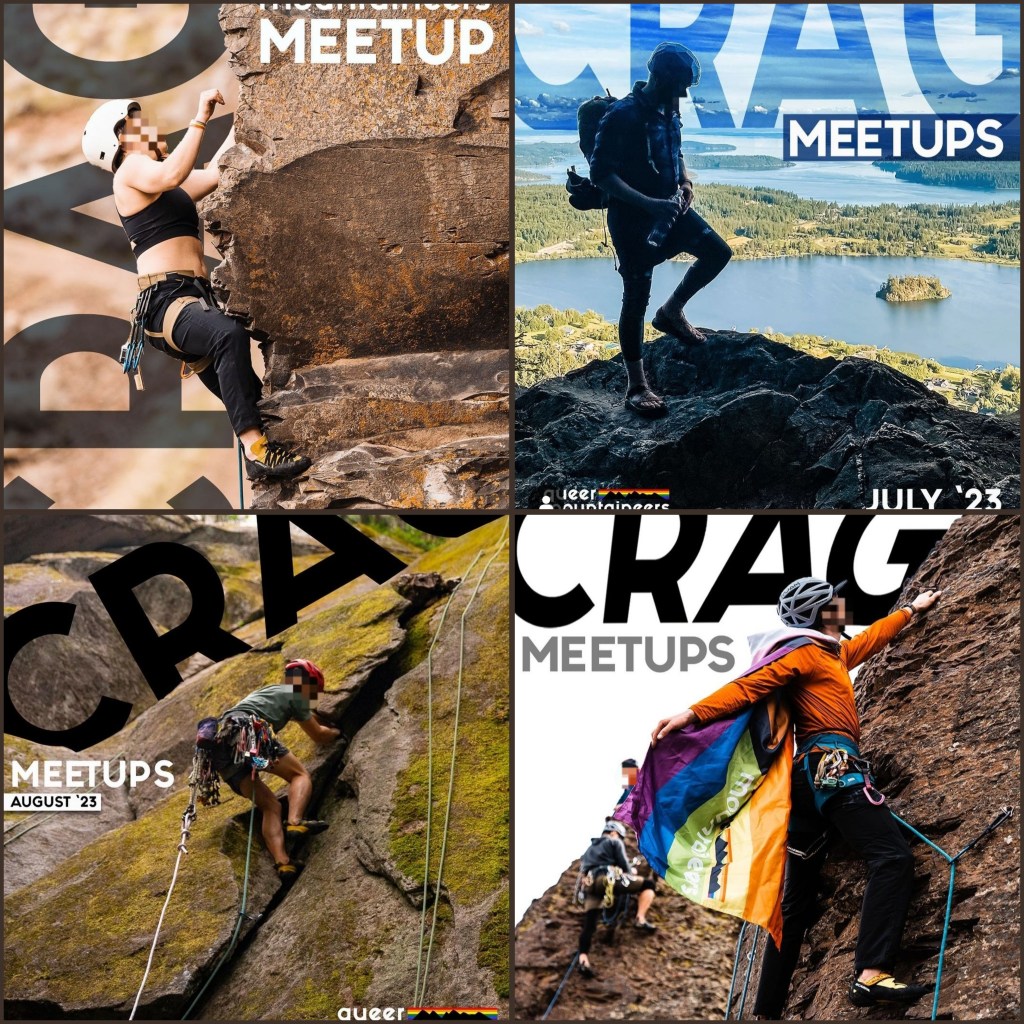
Yeah, so they were doing hikes and stuff, right? And then they were getting people to meet up and doing crag meetups, right? So we had a Vantage camp out. We had people going to the exits, right? All of these things that are being posted, they’re telling people to go out and do these things. And I’m like, if you are advertising this as an organization, it doesn’t matter if you say this is an informal meetup. If a person is coming out there and they’re being a volunteer, like you’re, you’re doing that thing, right? Yes, definitely we advertise, right? You’re not teaching, right? This isn’t a teaching thing. We’ve had guides out at a couple of things, especially like our bigger events, but that’s not a regular thing, right? And so one thing that’s really nice is that like with Climbers of Color, like I’ve had some training, like not maybe not necessarily like climbing related, but at least like with being inclusive and like having these different practices, right? Whereas with with QM there hasn’t been any of that training and so it’s really it was really a struggle for me when you’re like you’re trying to come up with language to figure out what the workaround is when the reality is like you should be considering people’s safety
And I am familiar with the motto of, yeah, we have these in the gym, right, which we have those. But it was also just the thing of, we’ve been volunteering for this organization for all this time. That’s the first time y ‘all telling us we ain’t got insurance.
Crystal
Yeah, okay. Yeah, and I feel like if you don’t have insurance, having boundaries is very important. Yeah, just no teaching in the gyms, right? Because the gyms haven’t trained this person to go teach during these climb nights, so that’s very clear. And then teaching outside. And coming from a guiding perspective too, if you’re not trained as a guide and you may not have the standard of doing things and you advise someone to do something a certain way, just, hey, I’m giving this to you as a friend in the context of a meetup, and then they go and they hurt themselves. I feel like you are wide open for litigation at that point, which is really unfortunate because the overall mission and goal of these groups is to get people out to climb, to have community, right? But don’t do it at your own personal expense, your own personal well -being, especially in our litigious society that likes to sue, right? Which is really unfortunate. And so I know you mentioned a risk management plan and I have looked into you getting insurance for affinity groups before and I know a risk management plan is part of that so do you think that they were focusing in on having a robust risk management plan to move towards purchasing their own insurance?
Eric
I’m sure that there’s some of that involved, right? Because I think that one of the things that is important to consider is that they were doing a variety of events, right? If a volunteer wanted to do something and run an event, they would just kind of let them run.
So we’re talking about people have led like stand up paddleboard and kayak events, right? People hiking rock climbing like they have done like a wide variety of different events, right? So understanding that right? They had a quote from an insurance company and they were also talking about like, okay, well if we’re gonna get insurance, what should we get an insurance for? And the ultimate decision at that time was to not get insurance for anything and just wait for this risk assessment. So yes, Crystal, you are on the right track. That is something that they were trying to do. I’m sure they never really said that, but I’m sure that that is what they are trying to do. The only issue is that you’re still encouraging people to still do events despite you not having this insurance yet.
Crystal
So just to be clear, they never told volunteers?
Eric
Yeah, not until recently, until I resigned from my volunteer position, my volunteer coordinator position, because that’s when it got out.
Crystal
Were they encouraging you to not tell people as well?
Eric
It was said without saying it.
Crystal
Unfortunate.
Eric
Yeah.

Crystal
Because as you’ve said, volunteers are the backbone and if all it takes is one time for someone to sue someone and I can guarantee you the volunteer pool will pretty much evaporate, right? Damn. Just damn.
Eric
Yeah.
Crystal
So have you, has anyone circled back around to talk to you about this situation or your exit? Nothing. I’m sorry.
Eric
No.
Crystal
Damn, you know, and it’s Pride Month, so I hope you have people to lean on and community to, I mean, considering that it’s Pride Month and it’s supposed to be a time to be holding space for that, and you come out with this story at this particular time must be really difficult.
Eric
Yeah, I, you know, I think that’s the other part of like, one of the things that like motivated me to say that was because like, you know, I said it in the end of my letter too, it was just like, part of this is about me reclaiming my joy, right? I haven’t had a joyous Pride month.
I am now, that I have put that shit out there and let that shit go. But yeah, definitely, it was really a struggle. And now I’m connected to my community, my loved ones, and the ones that I trust the most. And so pride is back to being enjoyable again.
Crystal
Good, I’m so glad to hear that. And do you think the informal meetups will continue with volunteers after this lid has blown off, so to speak?
Eric
I don’t think they’re doing them anymore. I haven’t seen the informal meetups like I used to before.
Crystal
Well, I’m really sorry that you felt the need to resign from a community that you hold so dearly and stepping up to want to make a difference and be in those leadership roles can be very difficult. So I commend you for sticking with it, you know, as long as you did and doing what you can to make a difference really. It’s very important.
Eric
Absolutely. Thank you.
Crystal
Did we miss any aspect of the story that you wanted to talk about?
Eric
No, I’ll just say;
I think it’s really important that as leaders, it’s important for us to learn how to have hard conversations, right? And that is just something that they currently don’t have the capacity to do, right? It’s a skill as a leader, right?
Whether you’re a climb night host and you see somebody doing something unsafe, right? Or you’re leading a hike and you see somebody do unsafe. Or if you’re an executive director, right? You need to have the skill to have uncomfortable conversations, right? And we’re not even talking about conversations about race or gender or like identity. We’re just talking about basic stuff. You have to be comfortable having those conversations and I can definitely say, at least from my experience, that they are not able to do that. Listening is also a big portion of being a leader, right? And being able to take that feedback that you get, whether it’s good or bad, and actually consider it. And I don’t think that they are in a place of considering what people say.


Crystal
Yeah, I am sorry to hear that. I mean, you’ve been volunteering with them for a minute, too, and so I would imagine you’d be a valued voice in the room of leadership and a diverse voice at that as well. But I’m sorry to hear that.
Eric
Yeah.
Crystal
Well, I think that’s all the questions that I really had. You’ve laid it out so beautifully. But yeah, just the only thing that keeps crossing my mind is damn, just damn. You know, we want these organizations to be good and we want them to be everything that our hopes, wishes and dreams could possibly want them to be. And sometimes they fall short. And I think the best thing they can do is learn from it and do better quickly.
Eric
Mm -hmm. I hope that they do. I really do. Look, I don’t, I’m never the type of person to wish failure on somebody, right? And like, to be clear, like, I think you, I think Queer Mountaineers is a great organization. Its leadership is not my favorite, right? But like, the volunteers, those folks that do that work every day, right? Like, there’s a lot of great and amazing stories that come out of there. But you can only go so far.
Crystal
I hope that they do.
Eric
When it comes to leadership, that is the big thing.
It don’t gotta be my way. There has to be a better way.
Crystal
Always a better way.
Okay, well thank you Eric for joining me and for sharing your story on Rock Rose Blog. It makes me feel honored but also at the same time a little sad that my blog is kind of centered around these things but I just feel like there’s not a lot of platforms for black folks to talk about affinity spaces, etc. And so I’m hoping that this will provide some insight for the listeners or the readers out there to take these voices and these perspectives very seriously. So thank you for your time and for joining.
Eric
Thank you for creating this space and thank you for holding and maintaining.
Crystal
Thanks Eric.
Below is Eric’s letter of resignation:


 Rock Rose Blog, LLC