
II of VI
In my particular case, I was never truly cared for in general, but especially in the context of my hair. No one took the time to learn about my hair or get me resources. Yes this was back when the internet was still not super popular; especially with the people attempting to raise me due to their age. However, we do have to ask ourselves why these two white women assumed there were only truly two options for Black hair. They assumed either natural but covered or straightened were the only two options. And there is so much more to my hair than that.
Foster care aside; I do feel that the older generations (Black and white) are still very steadfast in their attitudes toward using wigs or chemical straighteners to coax afro hair to look a specific way. “…if we want to ‘pull ourselves up by our bootstraps’ we should do everything we can within our control to seem presentable: which means skipping gym class or sports, pressing, chemically treating, and ‘taming’ our hair. A true mind game that always keeps us running short of being the best we can be as a person because we will never be good enough in that race.”3 An excerpt from my Black Hair in Climbing series.
And where did this idea come from? Chattel slavery, of course! When I say almost every racial practice in the United States stems from slavery practices of Black people, I am not making an exaggeration. Being enslaved and its implications is a mind contortion all in and of itself that teaches self hate which ripples destructively through generations. It has always, per usual, been driven by policy.
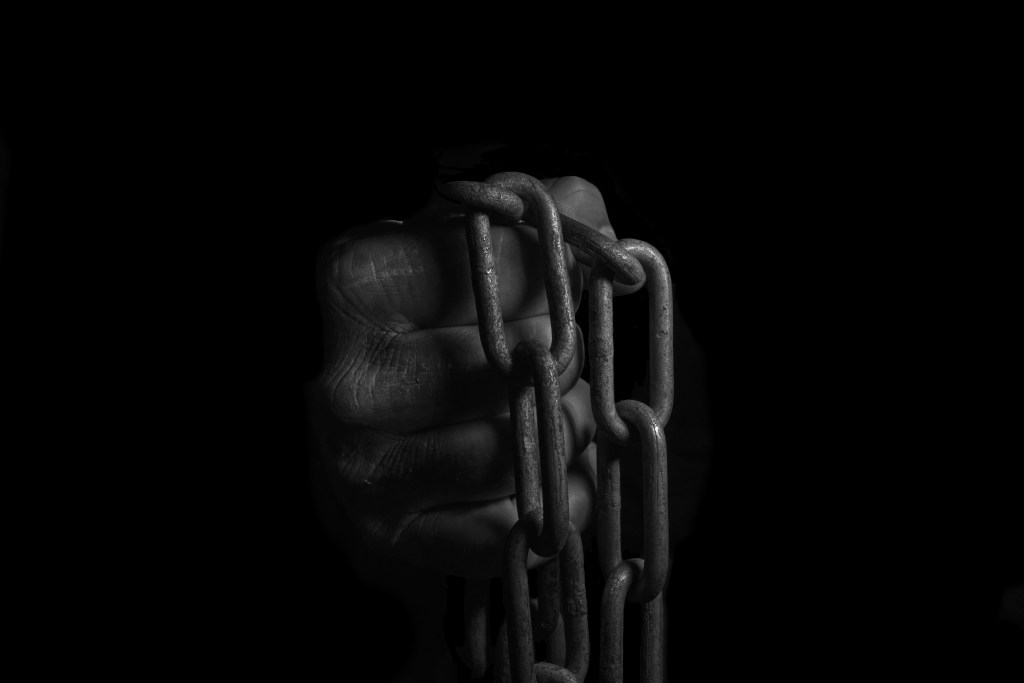
There is an extensive and nuanced history to attempted control of Black minds, bodies, and in turn, Black hair. “…history proves the actual reason your hair is considered unruly [as a Black person]…”4 An example of this would be the Tignon laws. “In the late 18th century, new economic opportunities and growth led to an increase in the free African and African-American populations of New Orleans. This was because some people of African descent were newly able to make money, buy their freedom, and subsequently increase the free Black population. And with that came an increase in interracial relationships, to the dismay of colonial authorities…women of African descent were known to wear their hair in elaborate styles…As a result, these enticing styles attracted the attention of men—including white men.”5 It forced women to cover their hair with a tignon (a cloth) via laws to signal that they were of slave origins. But of course like in many difficult situations, creativity came from it. They made them fly through decoration and bright colors. But the fact remained the ruling class did not want Black people integrated in society through family. So how could Black women make themselves blend into society and become what the powers that be wrongfully deemed more socially acceptable? I have talked about how it has been impossible to change the color of your skin; especially in those days. But hair can be manipulated and they desperately searched for a solution to be accepted…to be loved. Leaving the door open for any attempt to change, even if it was toxic.
Enter Madam CJ Walker. You may recognize the name as it comes with associations of the first Black woman millionaire or hair care pioneer in the 1900’s. If we look at the timeline for women’s rights in my article The Reel Deal: Women, Policy, and Autonomy there are a few things to note which are attributed to her monetary success.
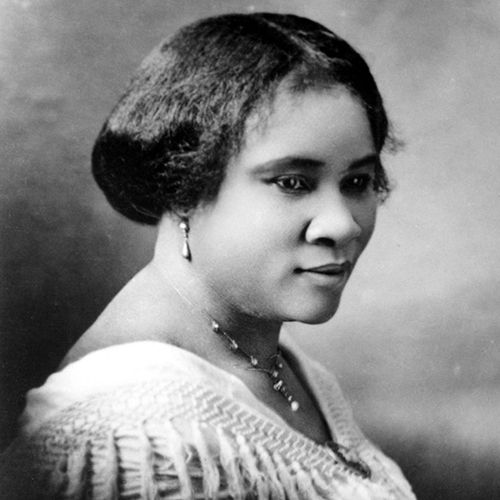
By 1905, Madam had started her own business of hair care products for growth specifically for Black women. This is an important distinction because of the time. “Along the indelible color line that court cases like Plessy v. Ferguson drew, blacks in turn-of-the-century America were excluded from most trade unions and denied bank capital, resulting in trapped lives as sharecroppers or menial, low-wage earners. One of the only ways out…was to start a business in a market segmented by Jim Crow. Hair care and cosmetics fit the bill. The start-up costs were low. Unlike today’s big multinationals, white businesses were slow to respond to blacks’ specific needs. And there was a slew of remedies to improve upon from well before slavery…[This was] part of a larger movement that witnessed the launch of some 10,000 to 40,000 black-owned businesses between 1883 and 1913.”6 Also of note is “During Reconstruction, Congress passed several statutes aimed at protecting the rights of the formerly enslaved…One such law was the Civil Rights Act of 1866, which declared that all people born in the United States were U.S. citizens and had certain inalienable rights, including the right to make contracts, to own property, to sue in court, and to enjoy the full protection of federal law.”7 Of course, it was not made law quite yet that women, especially women of color, could own or even open a bank account without a husband’s approval which came about in the 1970’s. Segregation in the United States also did not end until 1964.
Policy in addition to a need in the market fueled by Black people feeling less than was the key to Madam’s success. Although it was wonderful to have businesses cater to Black women or anyone who wanted to be groomed, there were those who questioned this new movement. “Booker T. Washington, who worried (to his credit) that hair-straighteners (and, worse, skin-bleaching creams) would lead to the internalization of white concepts of beauty.”8 As much as I agree with this sentiment; Booker T never understood what it was to be a Black woman with a yearning to be seen as respectable in society. And even in the sought liberation of Black people, a lot of attitudes were to let the Negro man get rights first and they would follow for women. Which they did, however, there are more unfortunate situations women get caught in when we talk about civil rights. And therefore, fighting for liberation should always unequivocally include women and a full gender spectrum in the initial fight.
And people paid mad money for these products, making Madam CJ Walker the first Black woman millionaire in the United States. Although I do applaud her for this; it should be noted that the measure of success for Black people should not be in becoming part of the elite class of ultra wealthy. She did create a lot of jobs and lifted Black women’s expectations of desired feelings of dignity by catering to that demographic, however, the way in which to become and/or maintain that sort of wealth always comes at the expense of the working class via low wages and terrible working conditions. I will be exploring this more in a future article, so we will leave this topic for now.
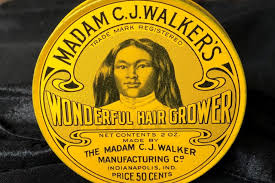
Was Madam CJ Walker perpetuating the idea that European beauty standards were desirable? I would say that Madam was more an accomplice than the problem. The real problem lies with white people systematically degrading Black people through slavery, servitude, and policy in order to limit access to power. And one weapon they were using was beauty standards.
“…why should it matter the manner of hairstyle or hair…? The answer is in power: in preserving white power. By flexing this [policy] it is a scare tactic to remind Black folks to stay in line and remember the lie we have been told: that we are less naturally and through our choices.”9 For a more in depth look at policy and discrimination around Black hair (yes even going on today), start with my article Black Hair and Climbing. When you are done reading, come back to finish this and it will all make much more sense.
I always felt inadequate with my hair: coming from poverty where I had no resources to actually take care of it to a white family who wanted to take care of my hair but stuffed it into European beauty standards feels a lot like the enslaved to freedom story. Generations of Black people watching white people enjoy privilege in society to care for themselves and have power is a huge motivator for many enslaved and former enslaved people to adopt looks, mannerisms, and attitudes to access that power and love in society. It’s survival of the worst kind: a torturing of the soul to never feel enough in your own skin.
And so when I did get the resources to afford straightening my hair I did. At every opportunity I could afford it, and in some cases even when I couldn’t. Skipping one meal a day for a week or two was a small sacrifice to pay to have my hair looking “good”, which was something I was willing to do. And for me, it waxed and waned because of my lack of financial resources. I did not feel people paid me any attention unless I had straight hair. I was probably right. In a way, this dips into the concept of pretty privilege.
“For women, hair extensions, nails, makeup, and other beauty enhancements trickle into the possession of ‘pretty privilege’, which can be achieved monetarily. In this particular case, my appearance gave the impression I had enough wealth to maintain my personal style…Along with the uniqueness of my hairstyle, appearing as a “high-maintenance” Black woman was an obvious trigger that is frequently experienced by mediocre men intimidated by “others” with better lives than them, all embedded in the white fragility…”10 Have you ever heard someone say that just by looking at a woman they knew they would not be able to afford to date her? It’s a catch 22: on one hand people pay almost no attention to you as a Black woman if you do not go all out in your looks, and on the other people judge you for being shallow or too expensive to date due to the associated maintenance costs. Either way: many people aspire to access pretty privilege. And in some dark, twisted way trying to be protected and cherished the way white women have been.

Our worth should not be tied to our looks but sadly it is. It always has been and just made exponentially worse with chattel slavery: slavery based on skin color and associated physical characteristics followed by ridiculous and undesirable stereotypes. With this, it snatched away the confidence of an entire population of Black people worldwide stemming from racist rhetoric to make us seem inferior and always second guessing ourselves. And it has opened us up to a whole mess of problems: problems that are silently killing us in our pursuit of happiness and power. This silent killer has taken the form of chemical straighteners, unfettered by policy.
In this day and age, there is a lot of information out there about the health risks associated with everyday products and exposure to things such as chemicals like formaldehyde (a known carcinogen aka cancer causing agent). Unfortunately, certain items do fall through the cracks of policy. And one of them is chemical hair straighteners. Before I talk about them specifically, let’s look at the agencies and policies over the years to protect us as consumers and workers.
Continued in Part III
Works Cited
3. Hudelson, Crystal. “Black Hair and Climbing.” https://rockrose.blog/2023/01/04/black-hair-and-climbing-3/, 13 May 2025
4. Nasheed, Jameelah. “When Black Women Were Required By Law to Cover Their Hair.”https://www.vice.com/en/article/black-womens-hair-illegal-tignon-laws-new-orleans-louisiana/, 10 May 2025
5. Nasheed, Jameelah. “When Black Women Were Required By Law to Cover Their Hair.”https://www.vice.com/en/article/black-womens-hair-illegal-tignon-laws-new-orleans-louisiana/, 10 May 2025
6. Gates, Henry Louis Jr. “Madam Walker, the First Black American Woman to Be a Self-Made Millionaire.”https://www.pbs.org/wnet/african-americans-many-rivers-to-cross/history/100-amazing-facts/madam-walker-the-first-black-american-woman-to-be-a-self-made-millionaire/, 15 May 2025
7. Hudelson, Crystal. “The Reel Deal: Women, Policy, and Autonomy.” https://rockrose.blog/2025/04/14/the-reel-deal-women-policy-and-autonomy/, 05/15/2025
8. Gates, Henry Louis Jr. “Madam Walker, the First Black American Woman to Be a Self-Made Millionaire.”https://www.pbs.org/wnet/african-americans-many-rivers-to-cross/history/100-amazing-facts/madam-walker-the-first-black-american-woman-to-be-a-self-made-millionaire/, 15 May 20259
9. Hudelson, Crystal. “Black Hair and Climbing.” https://rockrose.blog/2023/01/09/black-hair-and-climbing-8/, 10 May 2025
10. Tiarra, Kendal. “Traveling in Twist Outs: The Hair Politics of Black Women Abroad.”https://www.midnightandindigo.com/hair-politics-black-women-abroad/, 15 May 2025
 Rock Rose Blog, LLC