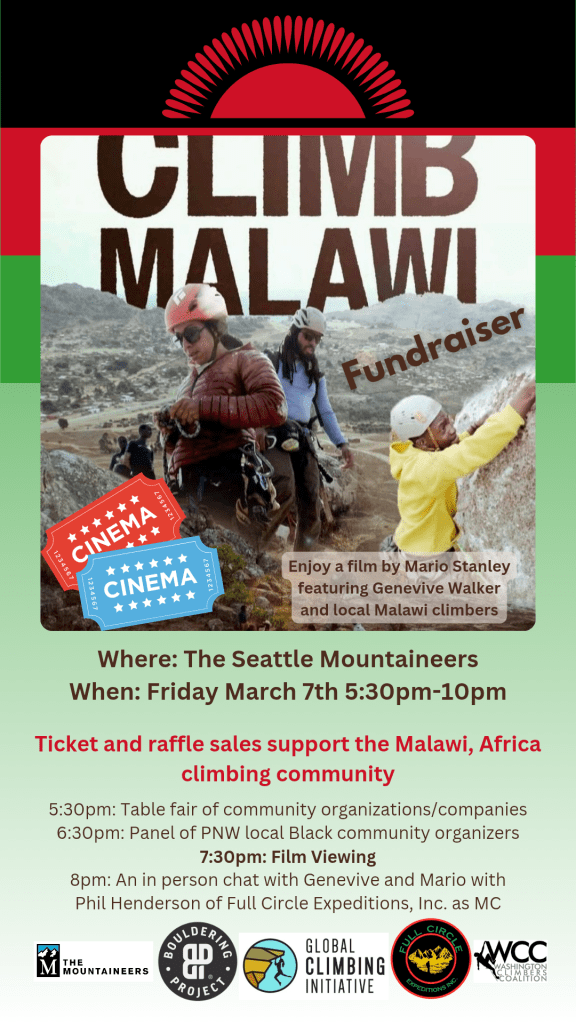
Hello good people of the world. Welcome back to Rock Rose blog. I’m Crystal, your host. And today I’m going to be talking about, of course, the Climb Malawi film fundraiser coming up March 7th in 2025. And I wanted to announce who the panelists will be before the film. Now, if you recall our schedule, 5.30 p.m. there’s going to be a nice table fair with a bunch of organizations and companies coming through to talk for you to talk to and then at 6.30 p.m. we are going to have a panel of all local Pacific Northwest Black community organizers and I am psyched about this some of these people are my friends; some of them I’m only familiar with their work from far away, but I’m excited to also be the panel emcee to chat with them.
Now, the raffle happens happens at 7 p.m. the film is actually at 7:30, but I would recommend coming early and make those connections if you can make it.
So let’s find out who’s going to be on the panel.


First up, have Sof Petros. Some of you know her as Sofia Petros, and they are wonderful, absolutely wonderful. I’ve worked with Sof for a number of years in the affinity realm as a guide, as an administrator of programs, et cetera. And Sof is also a full-time guide as well. So I’m very grateful, for you taking time out to come and sit on this panel. And they will be representing Out in the Wild. Now, if you’re not familiar with Out in the Wild, I highly suggest checking out their Instagram. Out in the Wild is a collective queer guiding company that was started by a friend of mine named Patrick Dunn. Patrick is amazing, always, always, always reshaping and re-honing what it means to be a queer guide in the space, and I’ve always admired his work for a long time. And Sof happens to be a part of this organization, and they’ll be speaking on behalf of that organization as well.
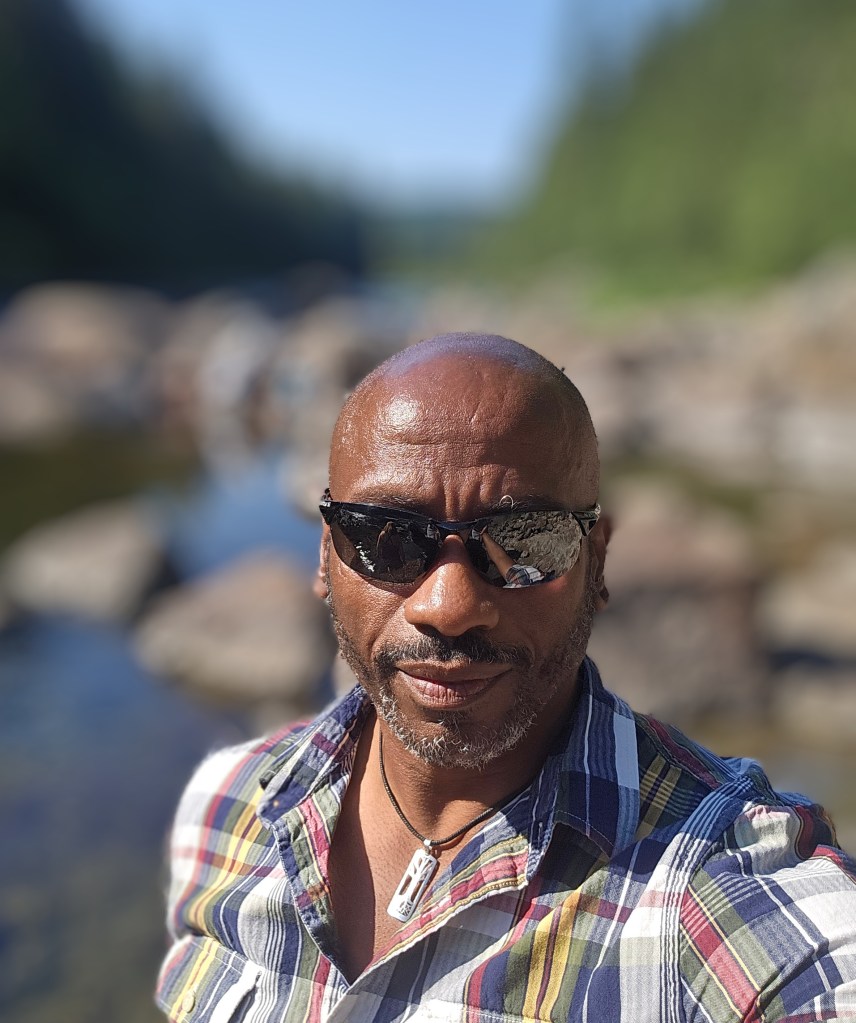
Now the next person that we have is Kasim Carter. Now if you’re not familiar with Kasim, Kasim just moved to the Pacific Northwest not too long ago and represents Outdoor Afro. Now there was a Seattle Outdoor Afro chapter here previously. Personally, I didn’t see a whole ton of things that were organized. Don’t get me wrong, I am not everywhere. I’m especially not on Facebook, so who knows, maybe there were.
But I just don’t remember a huge presence at all and that could be a number of things. No blame, no judgment here, just an observation. And yet when Kasim has moved over here, I have noticed an uptick in Black folks out there hiking, getting it. And he organizes a number of events through Outdoor Afro. And you can check out Outdoor Afro’s website as well.
They have an entire clothing line at REI. Rue Mapp, their founder, is really wonderful as well. But the local representation here would be Kasim Carter.


Now, our next person is Eric Ballentine. Eric is also another friend of mine. You’ve seen them up on this podcast before, and I’m so happy that they’re going to come out and be on this panel too. Now, Eric was doing work for a local Queer Affinity Group, an LGBTQIA2S plus affinity group specifically, and they continue that work through Minority Veterans of America, which specifically helps out women minority veterans, BIPOC minority veterans as well.
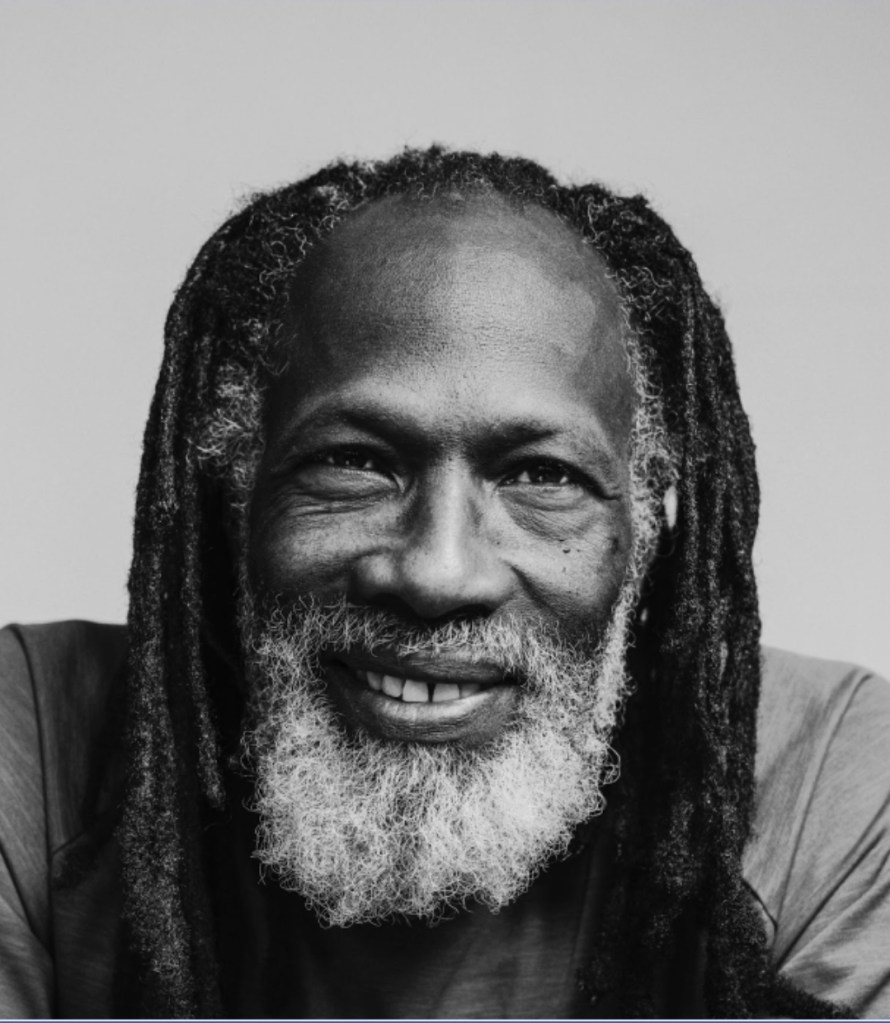
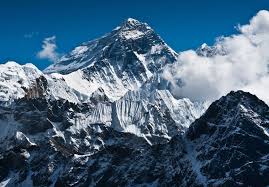
The fourth person you will probably be super familiar with, this is Phil Henderson. Although, yes, I know Phil is not local to the great Pacific Northwest. However, he does a lot of work out here. Specifically, the work that I’m familiar with him doing out here is through the BIPOC Guide Development Program through Alpine Ascents. He’s been very involved in that in the last couple years, among other things. Full Circle Everest also has huge roots here as well, considering that Fred Campbell, Adina Scott, and I believe Rosemary, their last name escapes me, but Rosemary from Full Circle Everest all are from this area as well. So Phil has a lot of roots here in the Pacific Northwest. Phil needs no introduction, but Phil is representing an organization called Full Circle Expeditions, Inc. I encourage you to check out their website as well. They’ve done some big projects in the mountaineering sector and some exciting things specifically for Black Americans as well, including but not limited to Mount Everest, Kilimanjaro, et cetera.
So I’d like to provide a little bit of context for this panel. Last year, at the end of last year, I did talk about this on social media just a little bit, but I’m gonna go into depth a little bit more at the moment. So last year, I attended a panel to listen to it at a town hall, and it was an all Asian American panel talking about climbing, which is great. I love that representation. I feel like it could have been marketed in a little bit of a different way, maybe explicitly saying that because I saw that on some websites that said it was and then other websites they just said it was just a panel. But I digress.
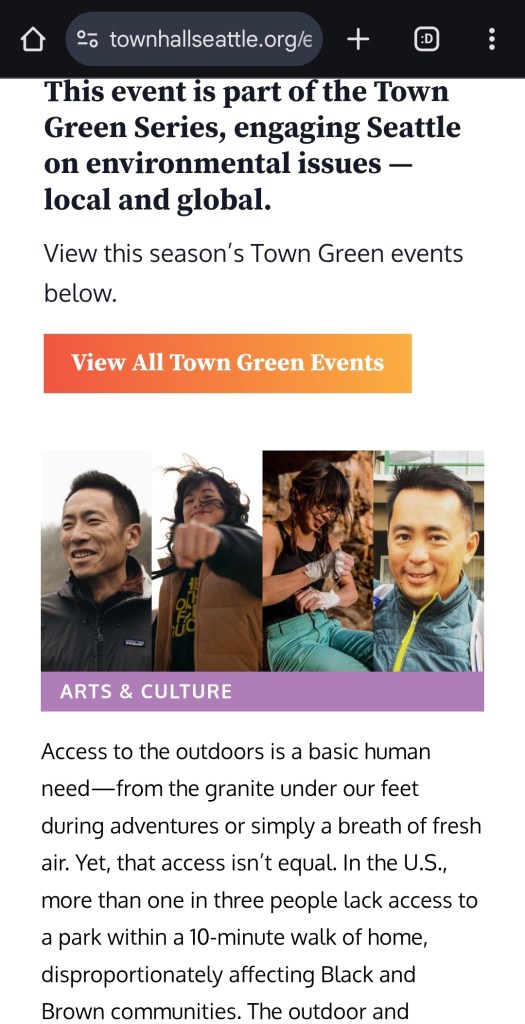
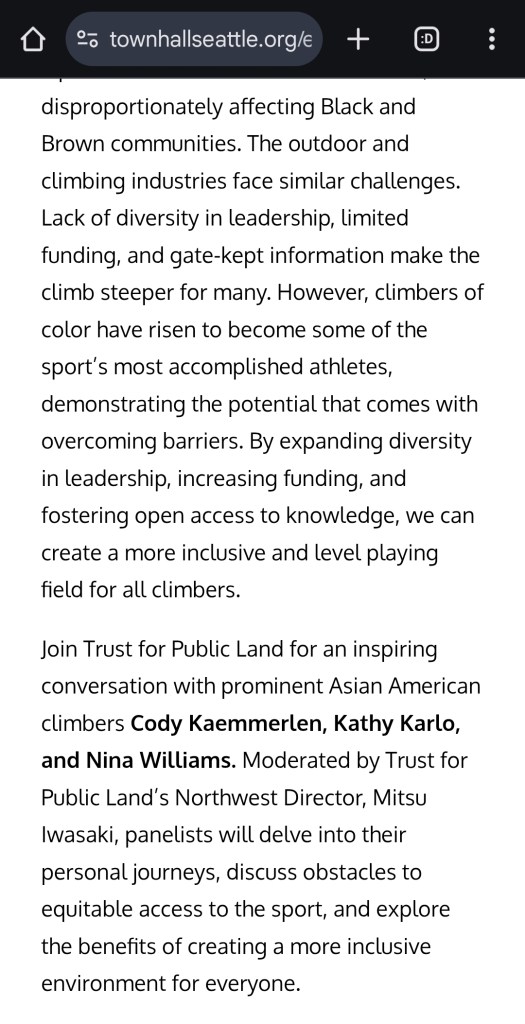
The panel was all Asian American climbers, fairly famous people that I’ve been familiar with over the years with their work in the affinity community and outside as well. And as I sat and listened to this, it was a really wonderful panel, like when they talked about their experiences by being trans racial adoptees or their experiences as Asian Americans in climbing spaces. It was all very, very interesting and engaging and I was enjoying the content immensely until…UNTIL a question was asked about how in affinity spaces do you keep space for the B and I in POC: the B and I in POC being Black and Indigenous. Now I have talked about BIPOC on my channel here before on my podcast and article that you can read it http://www.rockrose.blog or find me on Spotify.
And these terms are all encompassing, right? Unfortunately, because there’s a lot of nuance between POC groups and there’s even more nuance between Black folks and Indigenous folks because we do find ourselves in different situations than the general demographic of POC, especially Asian Americans, unfortunately. Now, I have talked about this at length. You are free to read my When the Minority Becomes the Majority blog because it expresses everything that I’m talking about here. So I will not go into depth right this second about it. Go and listen and or watch that first. With that being said, the B and I in POC is massively underrepresented, right? And in affinity spaces, we always need to keep in mind the minority within the minority because demographics that have a larger population, such as Asian Americans, do tend to be the majority in the space and sometimes running affinity spaces as well. And if we’re not careful to take careful consideration for the inclusion of the minority within the minority, AKA the B and the I, Black and Indigenous, in BIPOC, then we’re perpetuating the same systems that we have been trying to change. That’s it.
In this particular panel, the question was posed. How do you make space for the B and I in POC when there’s affinity events or spaces, et cetera, to ensure that they’re engaged and locked in and getting the full benefit, right?
And I’ll just be flat up front. I was disappointed in the answers. Number one, the first answer, of course, was talking about socioeconomic status. Let’s be real people. Not all Black folks are poor. Yes, it’s tied to racial demographics a lot of the time because of how Black folks were brought to this country and then kept down economically in this country. Yes, absolutely.
And so we should take that into consideration for all demographics, actually. However, I see it again and again and again, specifically when we’re talking about Black folks and Indigenous folks. And I’m not comfortable with it. There is a difference between socioeconomic status and race, and we do need to recognize they do intertwine, but they’re also separate issues.
The other thing that came out of someone’s mouth was that this person knew a lot of Black folks and thought of one in particular that was their friend that just wasn’t interested in the outdoors. Just flat, not interested at all. And I sat in my chair and I thought to myself, mm, mm, mm, mm, mm.
Now I was also further disappointed and personally disappointed because of my involvement in this particular story that came out with this panel. And I’ve talked about No Man’s Land Film Festival before. The first time I spoke about No Man’s Land Film Festival was based off an experience that I had in Eastern Washington a few years ago. And the result of that No Man’s Land Film Festival became my very first article on Rockrose blog actually. And that article is called Hip Hop in Climbing. Now if you’re familiar with this article, I do actually call out a very particular film. And I talk at length about the history of climbing through a Black and indigenous lens as well concerning the land, et cetera.
What ended up coming of that podcast was some conversations with the No Man’s Land Film Festival organizers and after you know some chatting and everything turns out they decided to have specifically a Black filmmaker grant which was wonderful. I thought this was fantastic and when it came out I was excited to see that they I believe they ran it for a second year as well and I was like wow I kind of made a difference that’s great I hope someone is able to use it. Well, on this particular panel, this person was the same person that I had talked to a few years ago about this particular topic who made that decision to make that grant. And unfortunately, she told a story about how they were so proud to have this Black filmmaker grant and ran it for a few years. And then people just were not applying. And so guess what they did?
They stopped offering the grant.
I was super disappointed to hear this because I was excited for this particular opportunity. I’m sure people were excited. So I think A: the first problem is that No Man’s Land Film Festival is not reaching Black folks personally. And we know that because of the film that they were airing and literally the people that I interviewed to talk about this film were like, “you know that Black folks have not seen this. Otherwise someone would have said something a long time ago.”
So the reach I think was just not there, number one. And if they didn’t change any of their outreach, then how was it going to reach the intended people, right?

Number two, sometimes just because you offer a grant expecting people to be at a certain place to take advantage of that grant, sometimes communities are not quite there. Not going to speak for everyone, but I’m just gonna say sometimes they’re not there. So maybe if it’s not the marketing, maybe the community isn’t ready for that type of commitment with the film making grant.
So instead, they could have taken that money and let’s see if we can have some kind of mentorship program where we are building up Black folks skills to this level, this desired level to be able to take advantage of this grant. But you know what came out of her mouth instead? They just canceled the whole thing. They said, we’re done. We’ve done enough. We ran it for a year or two and we’re giving up.
I couldn’t believe what I’d heard. So needless to say that I had a lot of mixed emotions walking away from that particular panel and observing some of the answers that I felt were problematic, actually, we’ll just say it, and also a deeper understanding of their personal experiences, which I found to be enriching and very interesting and valid points of view to be heard publicly, as well, especially in the climbing space.
But, you know, if you’re not prepared to answer a question, just don’t answer.
It’s okay to say I don’t know. And in this particular instance, I really don’t think that they did know. Or at least have an accurate grasp on how they could have answered it. At that point, I believe ego kind of takes over. You’re this big climber. You’re talking about all these things. You’re supposed to have all the answers, especially when it comes to P.O.C. representation. Well, guess what? We don’t all have the answers. And people that claim to have all the answers, maybe we should really be questioning them. That’s myself included. I have done a lot of learning and listening throughout the years and I still don’t have all the answers, y’all. I still offend people on accident and all I can do is try to change, apologize, move on and do better next time. Well, this panel is an attempt to remedy that. We specifically, will be talking about community connection and I’m going to pose this question to the panelists and you’ll get it here firsthand answers and ideas as to how to hold space for Black folks in sports that you love or sports that we love.
And so join us 6.30 PM, Friday, March 7th at the Seattle Mountaineers to listen to this all Black, Pacific Northwest local community organizer panel hosted by me, Crystal of Rock Rose blog, to be able to discuss some of these questions and ideas.
So we shall see what happens.
I’m really excited to put this on.
I just wanted to give some context as to what I was kind of thinking when I put this panel together and why I wanted specifically local Black community organizers to be on a panel to kind of talk about these things.
So there you have it. This event is going to be unlike a lot of the other events that you’ve seen here in the Seattle area, namely being a climbing event centering around Black folks. There aren’t just climbers there, especially on our panel. We have hikers. We have people with different interests.
Hopefully we’ll see you there. It’ll be a really interesting discussion. Once again, just to recap for the schedule,
530 p.m. There’ll be a table fair with a lot of organizations and companies that are really wonderful. 630 p.m. Local Black community organizers coming to talk about their organizations and other topics, a community connection. And then 7 p.m. We have a raffle. So stay tuned and we’ll talk about the raffle in a future update because there’s a lot of good stuff coming through that raffle. I might even put in for it myself.
And then at 7.30 p.m. we’ll have the film viewing. The film’s a half an hour. And then at 8 p.m. Genevieve Walker, Mario Stanley, and Phil Henderson are going to have their chat about the film and about their experiences with climbing overseas. Very excited about that.
Stop by, get your tickets today. It’s going to be a really wonderful event and hope to see you there.
 Rock Rose Blog, LLC
Thank you for another newsletter with directed reflection – I always learn a lot from your blogs and appreciate that you continue to be open to sharing your thoughts with the public. I’m really looking forward to the event!
LikeLike