
For video format, visit my Substack
“If you can’t hear what I’m tryna say…
If you can’t read from the same page
Maybe I’m goin’ deaf
Maybe I’m goin’ blind
Maybe I’m out of my mind”
-Pharrell and Robin Thicke1
“I used to go out to parties
And stand around
‘Cause I was too nervous…
To really get down
But my body
Yearned to be free
I got up on the floor and thought
Somebody could choose me”
-Marvin Gaye2
Imagine a climbing route developer. What comes to mind? Hard climbing? Strong personality? Maybe a bit intense? Is he white? Is he even a he? Sometimes says inappropriate jokes and chooses even worse climbing names?
Now picture how you access the route developer’s climbs: is it a paper guidebook? Mountain Project? Is it an app like Kaya? Or even augmented reality glasses with an AI assistant?3
What first came to mind for you? I’ll tell you what it was for me when I first learned about developers: a white, cis gender man with his shirt off and harness from 1999. Probably a beard and a situationship with his van. However, more recently when I think of guidebooks it has been digitally on an app like Kaya and route developers who are people of color willing to spread knowledge such as Gabriel Cisneros.
This article is going to be a ride, per usual: I am going to revisit the demographics of people in climbing based off some specific data collections, initiatives to get a diverse population into route developing, ethics around climbing names, and the controversy of app based guidebooks in regards to content and ownership. This article started out as me wanting to highlight the good work Gabriel Cisneros is doing here in Washington for a long time now in mentoring people of color to develop and re-bolt climbing areas. But I could not even express this story without a thorough conversation on the background in which a predominantly people of color developed crag called Robot Blocks came after.
The sections:
Part I: Demographics in Route Development
Part II: Route Development Initiatives
Part III: Robot Blocks
Part IV: Route Names
Part V: The Kaya Controversy
Part VI: The Digital Guidebook Landscape Shaped by Policy
Part I of V: Demographics in Route Development
Why would my first thoughts early on in my climbing time lead me to a cis gender white man as a developer? Well, the stats support this in climbing generally, not to mention an activity even more niche like developing.
When speaking about demographics in climbing, there have been attempts in making an effort to collect data in subjects of gender and race. Usually and unfortunately, it is not the intersection of the two, which leaves either whiteness or men as the default of which to compare. And I am here to tell you it’s a lot more nuanced than that under the umbrella of people of color and gender.
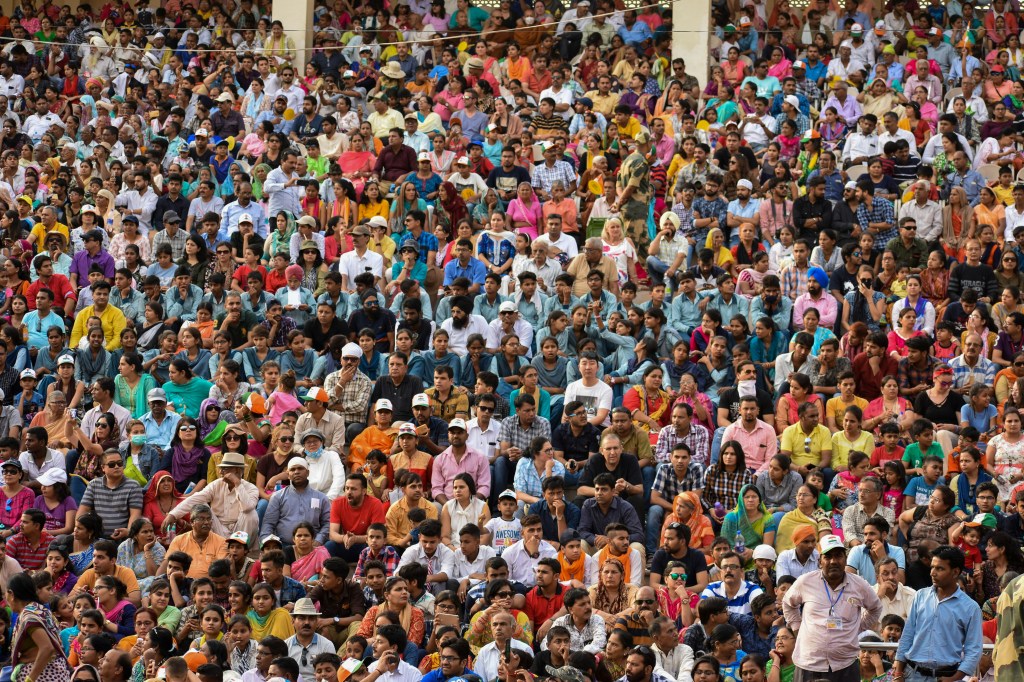
Within the climbing industry, there are a few themes that run congruently: little to no collection of gendered or racial data. That’s right: generally climbing gyms, professional guiding associations, guiding companies, and land managers who provide access to outdoor crags do not collect any demographic data. When you sign up for that gym membership, do they ask you for voluntary, anonymized information like your gender or race? Not that I have personally seen.
It has always been wild to me that climbing gyms do not collect such information to be better informed about their clients. We have to remember climbing gyms are for profit companies who generally only care about the number of memberships maintained and if anything comes up beyond that in relation to gender or race, they rely on affinity groups to bear the brunt of the hard work to remedy that, all the while privately harboring contempt at involving affinity groups in the first place. More on that particular topic in an upcoming article someday.
Even the American Mountain Guides Association (AMGA) does not collect any information. This is the largest professional certifying body for guiding in the United States and they have no idea what races or genders make up their membership. I myself have been a member of the AMGA since 2019 and have never seen them attempt to ask. To their credit, they did listen to affinity leaders and have their own affinity programming for women and people of color; but it is interesting that they have never found out for themselves just how large the gap is (in terms of numbers) between white, cis gender men and all other demographics of professional guides.
Speaking of gap: how can I make the claim of white, cis gender men being the overwhelming majority in climbing, and later climbing development, without data myself? I have lived experience to tell you this, but let’s explore what data has been put out there.
There are 2 reports that I have found of note: the American Alpine Club’s (AAC) 2019 State of Climbing report (which I have cited before in my past article) and the Outdoor Industry Association’s 2025 and 2026 Outdoor Participation Trends Reports.
It is important to note that one is a climbing specific report, and the other is overall outdoor participation. I have referred to the AAC report before in 2021 when I wrote Hip Hop in Climbing Part IV: Climbing Demographics and Inclusion.

“What are the stats on how many Black women, trans, and non-binary people are actually in the climbing community? According to the American Alpine Club 2019 State of Climbing Report, 41% of all climbers surveyed are female and 1% of all climbers surveyed are African American. 1% surveyed preferred not to answer the gender question of female, male, or prefer not to answer. There are no statistics on trans and non-binary which also speaks to an entirely different problem and it’s not good enough for the LGBTQIA2S+ community.”4 They also did not mention any intersectionality of gender and race: for example, Black women. This is important because if 1% are Black yet 41% are women: at the most 1% are Black women and at the least, less than 1% are. But it leaves a big gap in information about a very tiny, often overlooked demographic.
And I have always been curious as to how they collected this data and whether or not it was only their own members canvassed. Either way, at the time it reflected my world view of very few Black people, most especially Black women, in climbing.
In order to change those demographics, I was heavily involved with affinity groups over at least a 5 year period to get more people of color into climbing. But it was a difficult journey. I dove into the nuanced and delicate topic of demographics of a local affinity climbing organization in the Seattle area in my article When the Minority Becomes the Majority citing the AAC’s climbing specific survey.
I wrote: “…one cannot help but notice that a large amount of volunteers, course participants, and climb nights [here in Seattle] are majority of Asian descent. This in and of itself is not offensive: Seattle has a large Asian population (including Filipina/o and excluding Indigenous Hawaiian/Pacific Islander). Within the Seattle area, Asians make up 15.3% of the overall population, Black 7.3%, American Indian/Alaska Native 0.5%, Native Hawaiian and Other Pacific Islander 0.3%, and Hispanic/Latino/a/x 6.7%.”5 And these numbers are similar even today in 2026.6
I wrote and researched this back in 2021. To get a full picture of my analysis of how this affected affinity initiatives, go back and read that article. Have these numbers changed in climbing locally or even nationally?
Unfortunately, I cannot find a more recent version than the landmark 2019 AAC report. The only one that has come to my attention recently was the Outdoor Industry Association’s 2025 report.
The reason this particular research came to my attention was actually a Brown Girls Climb (BGC) Instagram Post. The script of the post is “According to the Outdoor Industry Association, only 9% of outdoor participants in climbing identify as Black or African American and only 6% as Asian American with even lower percentages seen in outdoor leadership. Fewer than 1% of certified climbing guides in the US identify as Black, Indigenous, or people of color. Many people of the global majority are the first in their families or communities to access outdoor leadership often without mentorship or financial support.”7
This blew my socks off! Had it changed so much even since I had started climbing around 2013? The stats were shocking to me: not because the stats were low, they seemed very high.
When looking for this report, I only found a free version that is outdoor industry wide. The first obvious point I want to make about this 2025 report by the Outdoor Industry Association (OIA)8 is about the outdoors in general, not climbing specific. When we look at the data it says there is a “12.8% (or 2.3 million) increase in Black participants” in outdoor activities. INCREASE. Not overall percentage.
They have since released stats for 2026 citing African American/Black Persons as 14,451 in 2019 and rising to 20,539 in 2025. And Asian/Pacific Islander Persons 9,167 in 2019 and 10,052 in 2025. This data set expresses Asian/Pacific Islander Persons as having a presence in the outdoors at a smaller rate than African American/Black persons for a while now. Is it true?
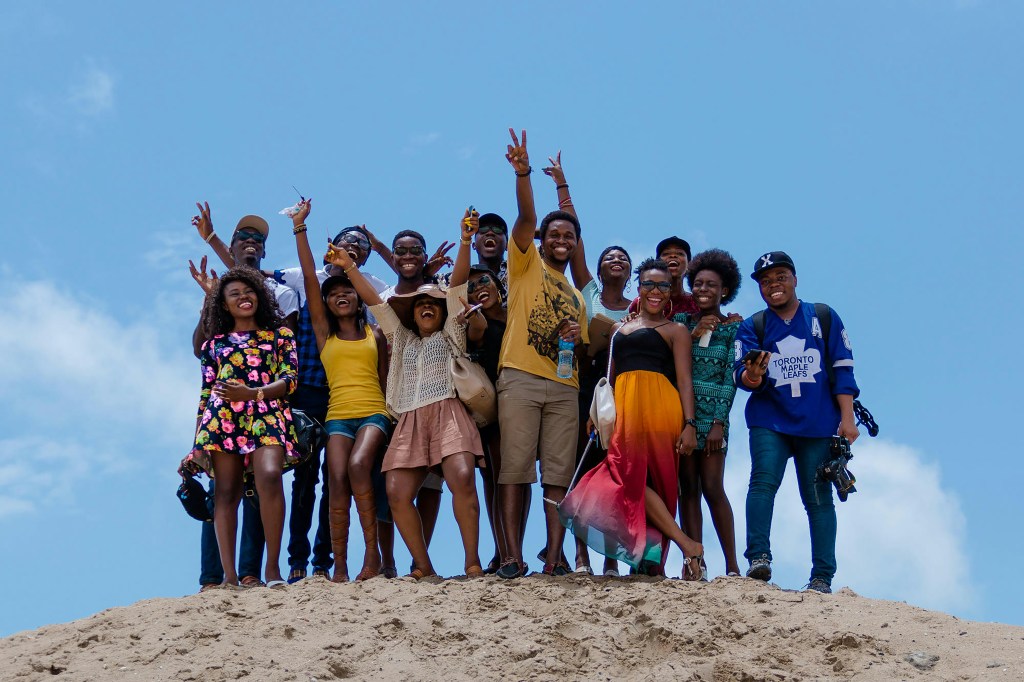
I cannot say. The OIA does have specialty reports broken down into indoor climbing, sport/bouldering, and trad climbing. Perhaps those reports would have further insights but they are behind a paywall. I can only assume this is where the Brown Girls Climb data post stemmed from because the numbers do not match the overall free report.
My lived experience (having traveled a lot for climbing and outdoor things) is that Black people’s participation has never exceeded Asian people’s participation in outdoor activities. Even in the most white spaces of climbing across the country, we would routinely see at least one Asian person in the mix and almost always little to no Black people. This was just based off pure observation: as I have expressed before, my partner and I were always paying attention because we were hungry for it.
With that being said: the OIA findings are not a reality in Washington state. Even if the stats have shifted to more Black than Asian representation in other places of the country, it is not lost on me that the intention of the BGC post was to shock people into action based on these low numbers of participation. But I do question how this data has been formed because I do not see the Black and Asian numbers reflected in general. And the comparison between demographics is less important: it would just mean a significant and almost unbelievable skyrocket from 1% to 9% Black climbers in about 6 years. Which is hard for me to believe, personally. The only thing we can establish for sure is white people are still the vast majority in the outdoors and climbing.
Which brings us to route development representation. Where, if any, is the data for demographics on this topic?
Lucky for us, a climber named Kimborough Moore has done a lot of thinking on this and documented his research. An accomplished guidebook author and developer, Kim is highly versed in the topic9. His studies have ranged from gender studies with climbing grades to gender in route development10. We will focus on the route development aspect here but eventually I would love to include his gender routesetting data set in an article eventually. All very fascinating data sets with transparent statements on collection and scope.
The scope here in his data was only climbing guidebooks and I think it’s also important to note that “Some books had multiple authors of mixed gender. Counted this as written by a woman.”11 He did not specify how many are written only by a woman or multiple women, but I suspect not many if any at all based on the numbers with mixed genders under the label ‘women.’
Kim used 3 major retailers to create percentages. Amazon had 208 books with 10 written by women coming in at 4.81%, REI 46 books with one woman at 2.17%, and Rock & Ice with 176 books with 15 women at 8.52%. All 3 showing less than 10% written by women; or shall we say even co-authored.

Climbing likes to declare that there is little to no gender disparity in climbing, however, for reasons I have outlined in my The Reel Deal: Women, Policy, and Autonomy series, there is. Through policies “…that have controlled women’s lives…it all intersects with the view of women being property.”12 Starting with no fault divorces and ending with no financial control in or outside of marriages.
I tied it all to the founders of Reel Rock and posed a hypothetical based on unintelligent comments Cedar Wright has made in the past such as suggesting his wife wear a full body burka to be more of his liking. “What if it were earlier in the decade when Cedar’s [Wright’s] wife did not have access to her own bank account and resources? Theoretically he could have imposed his will on her with this dress code because society and policy allowed it (and his parent’s generation most certainly did). And to take it even further: would his wife even be climbing? I personally have known women that are servants of the house doing all the cooking, cleaning, and housework while the husband works and keeps all his wages to himself, only supplying her the bare minimum for groceries and childcare items if they had children. Does this sound like a situation in which a woman would go to the crag of her own volition to discover climbing? Absolutely not! The policy and structure that was in place up until even the 70’s had major potential road blocks to women climbing of her own volition and can further explain why a lot of us have been brought into the sport by men: all this time men (particularly white men) have had the financial freedom and power to wander out into the woods and attempt to climb a rock.”13
Of course, most of the documented history of women’s climbing is also white women. Kim’s data does not break down into women of color, trans, non binary, or gender non conforming people. Which can be a difficult and inappropriate thing to account for based off appearance and name. I considered googling the names of the women guidebook authors to see if I could decipher anything, however, in the end decided not to in order to not misstep. I can assume, however, the vast majority are white women with a few Asian women sprinkled in and possibly an outlier or two of something else. This has almost always been the trend in climbing, even on the women’s side of things.
One other note I would like to throw in there is about trans authors. If you are familiar with Nikki Smith14, she is also an experienced guidebook author and climber. However, you will notice in Kim’s research in the Rock & Snow tab in block A19 there is an entry called A Granite Guide with Nikki’s deadname as the author. Further notice there is no designation that a woman wrote this. Of course, I am certain that the designation decision belongs to the author and conversations were had around this but it begs the question of LGBTQ+ representation in guidebook authorship and route development. Which is absent in this data set as Nikki’s current name is not even mentioned nor counted under woman authorship. Several websites do name her as the co-author but the books list her deadname still15. I am guessing that trans authors are also few and far between as well, still showing cis gender white men as the standard for authorship and developing.
So are there initiatives to inject diversity into outdoor routesetting at all?
Next is Part II: Route Development Initiatives
- “Robin Thicke – Blurred Lines ft. T.I., Pharrell” YouTube, uploaded by Robin Thicke, 20 Mar 2013,
https://youtu.be/yyDUC1LUXSU?is=o7vXR8jf7Hbye0E4 ↩︎ - Got to Give It Up” YouTube, uploaded by Marvin Gaye, 29 Oct 2018, https://youtu.be/qhFNY9zW2F4?is=7BHIlpvxTvVw2RxB ↩︎
- Climbing Magazine. “Are 3D Topos and AI Climbing Assistants the Future of Climbing?” https://www.climbing.com/news/augmented-reality-3d-topos-climbing-technology/ 20 Aug 2026 ↩︎
- Hudelson, Crystal. “Hip Hop in Climbing Part IV” https://rockrose.blog/2021/04/30/hip-hop-in-climbing-part-iv/ 23 Jun 2026 ↩︎
- Hudelson, Crystal. “When the Minority Becomes the Majority.” https://rockrose.blog/2021/11/14/when-the-minority-becomes-the-majority/ 23 Jun 2026 ↩︎
- “Census Dots.” https://www.censusdots.com/race/seattle-wa-demographics 02 Sep 2026 ↩︎
- Climbing Magazine and Brown Girls Climb. Video of climbing demographics for fundraiser. Instagram, 31 Jul 2026, https://www.instagram.com/reel/DLpdULZxw-q/?igsh=MTFsZGF6c3pma2E0cw== ↩︎
- Outdoor Industry Association. “Executive Summary: 2025 Outdoor Participation Trends Report.” https://oia.outdoorindustry.org/exec-summary-outdoor-participation-trends?fbclid=PAZXh0bgNhZW0CMTEAAaf2Kui4xcsxcx4MyMNr-uxuG38dAf0j-X3zzGo5gSz6RFvAsrR-wq15F9Fxow_aem_eZizn9WrAmQBImqDgyyJRA%23 31 Jul 2026 ↩︎
- Moore, Kimbrough. “Kimbrough Moore.” https://www.kimbroughmoore.com/ 31 Jul 2026 ↩︎
- Moore, Kimbrough. “Climbing Data.” https://drive.google.com/drive/folders/1gQVUpFmGM8fo19SONOn4IVtkU3Qvgaf9 31 Jul 2026 ↩︎
- Moore, Kimbrough. “Gender in Guidebook Data Set.”https://docs.google.com/spreadsheets/d/10TVOBEfcxQsDd7PuwgSOrwvRIiitA0SJDakTV9cNFU8/edit?gid=0#gid=0 31 Jul 2026 ↩︎
- Hudelson, Crystal. “The Reel Deal: Women, Policy, and Autonomy.” https://rockrose.blog/2025/04/14/the-reel-deal-women-policy-and-autonomy/ 31 Jul 2026 ↩︎
- Hudelson, Crystal. “The Reel Deal: Women, Policy, and Autonomy Part V.”https://rockrose.blog/2025/05/02/the-reel-deal-women-policy-and-autonomy-5/ 31 Jul 2026 ↩︎
- Smith, Nikki. “Nikki Smith.” https://nikkismith.com/bio 31 Jul 2026 ↩︎
- Pull Publishing. “A Granite Guide.” https://www.pullpublishing.com/books-1/a-granite-guide 31 Jul 2026 ↩︎
 Rock Rose Blog, LLC